العربية
 Francés
 Русский
 ไทย
ไทย
 Việt
Việt
 日本語
日本語
 한국어
한국어
 Bahasa Indonesia
 Español


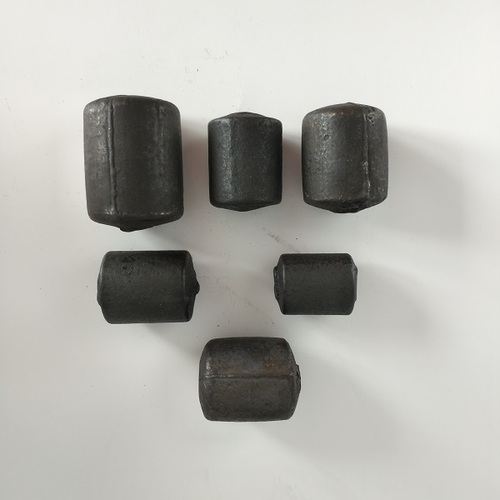

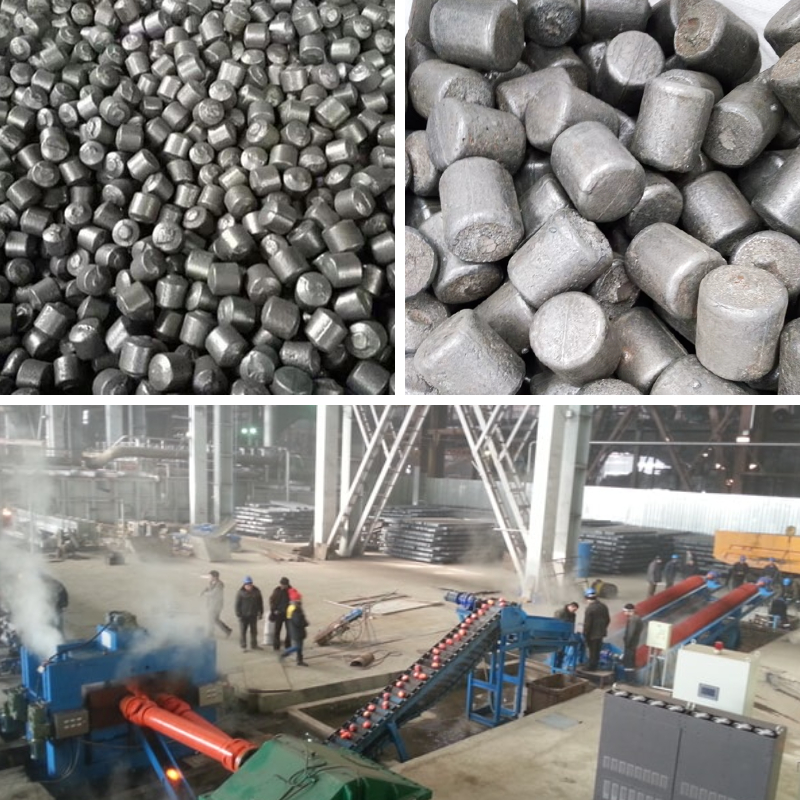
Mine Wear-Resistant Forging
Denser internal structure
Forging refines metal grains and improves compactness, free from casting defects such as porosity and blowholes, resulting in stronger toughness and impact resistance, and less prone to fracture.
Excellent fatigue resistance
With continuous and complete metal flow lines, it has a much longer fatigue life than ordinary cast steel parts under repeated impact and extrusion, making it suitable for heavy-duty working conditions.
Good dimensional accuracy and consistency
Forgings feature regular shapes, controllable machining allowances and high dimensional stability, facilitating subsequent machining and assembly.
Balanced mechanical strength
It offers an excellent combination of strength, plasticity and toughness, being both wear-resistant and impact-resistant, not easy to chip or break, ideal for harsh industrial and mining environments.
High reliability and stable service life
With few internal defects and uniform performance, it features small deformation and even wear during long-term use, ensuring safer and more stable equipment operation.
Wide application range
Capable of producing large-size and special-shaped parts, it performs prominently in heavy-duty wear-resistant scenarios such as mining, building materials, electric power and metallurgy.
Forged Steel Forgings — Overview, Characteristics & Application Scope
I. Overview
II. Product Characteristics
- Dense microstructure, free of internal defectsForging refines metal grains, eliminates shrinkage cavities, porosity and segregation, resulting in high compactness and uniform overall performance.
- High toughness and impact resistanceWith continuous and complete metal flow lines, forgings have excellent impact and fracture resistance, and are not prone to chipping or breaking.
- Balanced and stable mechanical propertiesFavorable combination of strength, plasticity and toughness, with both high wear resistance and structural reliability.
- Long fatigue lifeCapable of withstanding alternating loads and repeated impacts for a long time, suitable for high-intensity continuous operation.
- High dimensional accuracy and good machinabilityRegular shape, uniform machining allowance, high dimensional stability, convenient for subsequent machining such as cutting, drilling and assembly.
- Wide adaptability to temperature and working conditionsMaintains stable performance under harsh conditions including high temperature, high pressure, severe wear and corrosion.
III. Application Scope
Mining Machinery: Crusher hammers, liners, grinding balls, grinding cylinders, jaw plates and other wear-resistant spare parts
Metallurgical Equipment: Rolling mill roll rings, guide and guard parts, conveyor rollers, wear-resistant bushings, etc.
Cement & Building Materials: Ball mill liners, compartment plates, hammer discs, impact plates, etc.
Electric Power & Energy: Coal mill parts, fan blades, boiler wear-resistant accessories, etc.
Engineering Machinery: Excavator bucket teeth, track plates, pin shafts, gears, shaft forgings
Petrochemical Industry: High-pressure valve bodies, flanges, pipe fittings, pump body forgings, etc.
Shipbuilding & Heavy Equipment: Shafting, rudder systems, large structural forgings